Shockwave Therapy: What to Expect During Your Treatment
Have you been dealing with a nagging heel spur, a persistent tennis elbow, or a shoulder that just will not cooperate? If traditional rest, ice, and physical therapy have not delivered the relief you were hoping for, shockwave therapy offers a different path. Instead of just masking the pain, this treatment triggers the body's own repair mechanisms using targeted acoustic energy. For residents of Jacksonville, FL, looking for effective shockwave therapy treatment, knowing what to expect during the session itself can remove the guesswork and help you prepare mentally and physically for the experience.
This guide walks you through the science, the sensation, the recovery, and the timeline so you can walk into your appointment with complete confidence. Whether you are an athlete pushing through tendinopathy or someone managing chronic heel pain, understanding the procedure steps will make the process feel familiar and manageable.
Key Takeaways
- Shockwave therapy uses acoustic waves to stimulate healing in injured tissues and break down calcifications.
- The treatment sensation ranges from a deep thumping to mild discomfort, depending on the energy level and condition.
- Most patients need 3 to 6 sessions spaced one week apart for optimal clinical results.
- Post-treatment soreness is normal and typically resolves within 24 to 48 hours.
- Radial and focused shockwaves serve different purposes; focused waves target deeper, specific points.
How Do Acoustic Waves Trigger Healing in Injured Tissue?
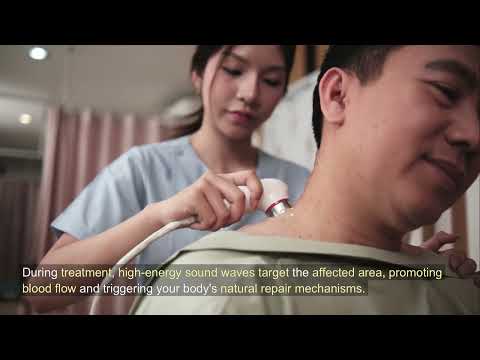
Imagine the sound waves from a loud concert vibrating a windowpane. Shockwave therapy works on a similar principle, but the energy is focused directly into damaged tendon or bone. The high-energy acoustic wave creates microtrauma at the injury site, which essentially wakes up the local blood supply and stimulates the cells responsible for tissue repair. This process, called neovascularization, is the biological engine behind the treatment's long-term benefits.
The energy also breaks down calcific deposits—those gritty calcium buildups that often form in the rotator cuff or Achilles tendon. Once these deposits are fragmented, the body can clear them out naturally. The result is a tissue environment primed for regeneration rather than chronic inflammation. Unlike corticosteroid injections that simply numb the area, shockwave therapy addresses the underlying structural issue.
Radial vs. Focused Shockwaves: Which Targets Your Condition?
Not all shockwaves are created equal. Radial shockwave therapy disperses energy over a broader, more superficial area, which makes it ideal for conditions like lateral epicondylitis or plantar fasciitis. Focused shockwave therapy, on the other hand, concentrates energy into a tiny, deep focal point. This precision is often preferred for deep-lying issues like gluteal tendinopathy or avascular necrosis of the femoral head. The Jacksonville shockwave therapy specialists you choose should be able to articulate which modality fits your diagnosis. The right choice depends entirely on the depth and nature of your injury, which is why a thorough physical exam is non-negotiable.

What Happens During Your Initial Evaluation in Jacksonville?
Your first appointment is as much about information gathering as it is about application. The clinician will start with a full medical history, focusing on the duration of your pain and prior treatments. Then comes the physical exam. The practitioner will palpate the area to find the exact painful point—the "sweet spot"—because precise targeting is critical for successful results. Often, an ultrasound is used to visualize the tissue depth and confirm the diagnosis.
Once the target is identified, a conductive gel is applied to the skin, and the shockwave handpiece is placed firmly against your body. The session begins at a low energy level to allow you to acclimate before gradually increasing to the therapeutic dose. The entire setup and treatment process usually takes about 15 minutes. For a deeper understanding of how different clinics approach this, we break down the shockwave therapy near me for our Jacksonville readers. Then, the protocol is clearly outlined:

- Comprehensive history and symptom mapping.
- Ultrasound or physical palpation to pinpoint the injured structure.
- Application of coupling gel to the shockwave handpiece.
- Sequential delivery of 2000 to 3000 pulses at a frequency of 1 to 15 Hz.
- Immediate post-treatment stretching and ice guidance.
Does Shockwave Therapy Hurt? What the Thumping Really Feels Like
This is the question patients ask most often. If you have ever had a blood pressure cuff inflated very tightly or received a deep tissue massage over a knot, you are in the right ballpark. The sensation is a deep, rhythmic thumping that resonates against the bone. The intensity is directly related to the energy level required for your specific condition. A chronic, dense calcification at the shoulder will require a higher energy density than a fresh strain in the Achilles.
"The most honest description patients give is that it is a 'deep, thumping thud' that reverberates through the bone and tendon. It is uncomfortable, but it rarely lasts more than a few minutes per spot."
It is a transient, controlled discomfort. You control the dial; if the pain becomes too sharp, the practitioner can reduce the energy. The payoff? A single session can trigger weeks of cumulative healing. Many patients find the discomfort tolerable because they understand it is a direct signal that the healing mechanism is being activated. The alternative—surgery or prolonged disability—is often far more daunting.

The immediate feedback loop between patient and practitioner is one of the strongest safety features of the procedure. No two patients experience it exactly the same way, which is why verbal communication during the session is vital.
How Many Sessions Will You Need for Chronic Pain Relief?
Shockwave therapy is not a one-and-done solution. The body's healing response takes time to build. Standard protocols recommend three to six sessions, spaced exactly one week apart. This spacing coincides with the body's natural inflammatory and repair cycle. Too close together, and you may overtax the tissue. Too far apart, and you lose the cumulative effect.

The 6-Week Milestone: When Most Patients See Real Change
Consider a patient with chronic Achilles tendinopathy who has been limping through morning runs for six months. After three shockwave sessions, they often report a significant decrease in morning stiffness, moving from a high pain level to a manageable one. By the six-week mark, the real structural improvement becomes apparent. The tendon becomes less tender to the touch, and functional tests like single-leg heel raises become easier. If you are searching for shockwave therapy near me, understanding this commitment is key, which is why we break down the shockwave therapy treatment for Jacksonville patients. The timeline is not arbitrary; it reflects the biological reality that tissue remodeling requires consistent, spaced stimulation.
Why Is There Soreness After Treatment and How to Manage It?
Do not be alarmed if you feel a dull ache or a bruise-like sensation in the treated area for 24 to 48 hours after your session. This is a sign that the therapy has successfully induced a local inflammatory response—the very process needed for healing. The goal is to harness this response without suppressing it.
The First 24 Hours: Activity Modifications That Matter
You should avoid high-impact activities and heavy lifting that directly loads the treated area for at least two days. What about ice or anti-inflammatories? This is a crucial nuance. While ice can reduce pain, it can also blunt the healing inflammatory cascade you just paid for. We recommend using heat or gentle movement instead. Managing this soreness properly is key, and we explain the do's and don'ts in our resource on shockwave therapy jacksonville fl.
- Avoid high-intensity or plyometric exercises for 48 hours post-treatment.
- Refrain from taking NSAIDs unless absolutely necessary for sleep.
- Do not apply deep ice directly to the treatment site for longer than 10 minutes.
- Avoid prolonged sitting or complete immobilization; gentle walking is encouraged.
Frequently Asked Questions
How long does a single shockwave therapy session take?
The actual treatment time is quite short, typically lasting between 5 and 10 minutes once the setup is complete. Plan for a total appointment time of 20 to 30 minutes to account for the evaluation and discussion.
Does insurance cover shockwave therapy in Jacksonville, FL?
Coverage varies significantly. Many insurance plans classify shockwave therapy as an elective procedure, so it is often not covered. However, many clinics offer affordable self-pay rates or package deals to make the treatment accessible.
Can shockwave therapy make my injury worse?
No, but it can temporarily increase pain and inflammation as part of the healing process. This is a predictable response. Severe worsening of symptoms is rare if the correct protocol and energy levels are applied by a trained professional.
Is shockwave therapy safe for patients taking blood thinners?
Patients on anticoagulants can still receive shockwave therapy, but it is essential to inform your practitioner beforehand. The main risk is an increased likelihood of bruising or a hematoma at the treatment site.
What is the typical success rate for plantar fasciitis treatment?
Clinical evidence shows that shockwave therapy has a very high success rate in treating chronic plantar fasciitis, often avoiding the need for surgery. It is considered the gold standard non-invasive approach for this condition.
How soon can I return to running or sports after a session?
You can usually return to light activity the next day, but we advise waiting 48 to 72 hours before engaging in high-impact sports that heavily stress the treated tendon or joint. Listen to your body and scale back if you feel sharp pain.

No comments:
Post a Comment